
Why Your PCOS Symptoms Are Not Improving | 5 Common Mistakes Women Make
Struggling with PCOS despite treatment? Discover the 5 common mistakes that may be preventing recovery and learn how to address the root cause naturally
7/6/20263 min read
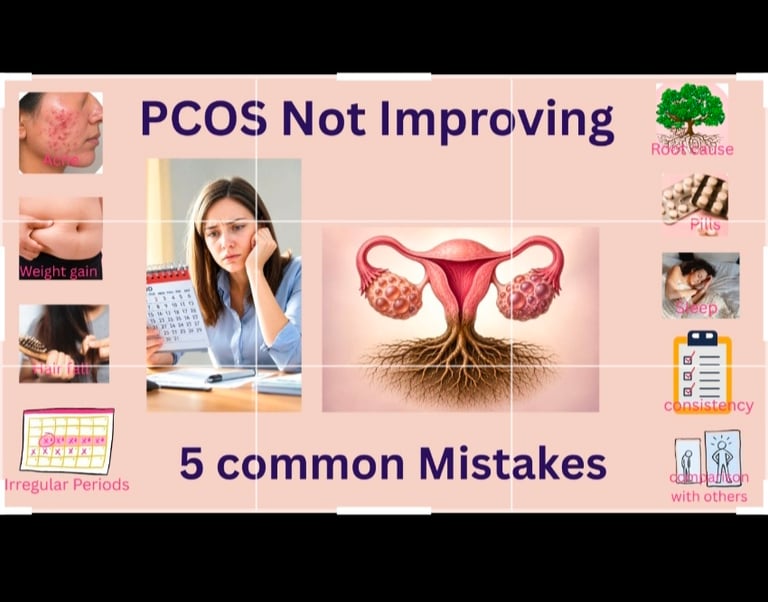
"Doctor, I'm trying everything... so why are my PCOS symptoms still not improving?"
This is one of the most common questions I hear from women with PCOS.
The truth is that many women unknowingly make a few mistakes that prevent them from seeing long-term improvement.
Let's discuss the five most common ones.
1. Ignoring the Root Cause
One of the biggest mistakes is focusing only on symptoms instead of addressing the underlying cause.
Let me explain with a simple example.
Suppose a patient comes to me with acne. If I treat only the acne, it may improve. However, if the underlying hormonal imbalance is not addressed, the acne often returns once the treatment stops.
The same happens with irregular periods. Medicines can help regulate the menstrual cycle, but if the root cause remains untreated, irregular periods may return after stopping medication.
This pattern can occur with many PCOS symptoms, including acne, excess facial hair, weight gain, and irregular cycles.
Instead of asking only, "Which medicine should I take?", also ask:
· Why is my testosterone elevated?
· Why am I developing insulin resistance?
· What is triggering these hormonal imbalances?
Treatment should focus on identifying and managing these underlying factors along with symptom control.
When the root cause is addressed, long-term improvement becomes much more likely.
2. Depending Only on Hormonal Pills
Many women believe that hormonal tablets alone will permanently solve PCOS.
However, hormonal medicines are primarily used to regulate symptoms such as irregular periods. They do not treat every underlying factor contributing to PCOS.
This is why symptoms often return after stopping the medication if lifestyle changes are ignored.
Diet, regular exercise, quality sleep, stress management, and maintaining a healthy weight are equally important parts of PCOS management.
Medicines work best when combined with healthy daily habits.
3. Ignoring Your Sleep Schedule
Sleep is one of the most overlooked parts of PCOS management.
Many people eat healthy foods and exercise regularly but continue sleeping late, binge-watching shows, or getting inadequate sleep.
Poor sleep can contribute to hormonal imbalance, increased stress hormones like cortisol, and worsening insulin resistance.
Getting 7-8 hours of quality sleep every night supports hormonal regulation and overall health.
Remember the old saying:
"Early to bed and early to rise makes a person healthy, wealthy, and wise."
Sometimes, improving your sleep routine is just as important as improving your diet.
4. Comparing Yourself with Others
Many young women compare themselves with friends or relatives.
"She eats junk food every day and is still slim."
"I'm following everything correctly, but I'm still struggling."
The truth is that every body is different.
Genetics, hormones, metabolism, stress levels, sleep quality, and lifestyle all influence how PCOS affects each individual.
Someone may not experience obvious symptoms today, but unhealthy habits can still affect their health over time.
Instead of comparing yourself with others, focus on understanding your own body.
The better you understand your body's needs, the better you can support your long-term health.
5. Trying Everything Without Consistency
This is probably the most common mistake.
One week it's an herbal remedy.
The next week it's intermittent fasting.
Then a new yoga routine.
Then another diet you saw on social media.
Constantly changing your approach makes it difficult to know what is actually helping.
Instead, work with your healthcare provider to develop a realistic treatment plan that includes appropriate medicines (if needed), nutrition, physical activity, stress management, and lifestyle modifications.
Then stay consistent.
Most meaningful improvements in PCOS take time. Give your plan at least 3-6 months before expecting significant changes, unless your doctor advises otherwise.
Remember:
Consistency beats perfection.
Final Thoughts
Managing PCOS is not about finding one miracle medicine.
It's about addressing the root causes, making sustainable lifestyle changes, and staying consistent over time.
If you're struggling with PCOS and want a personalized, root-cause-focused Ayurvedic treatment plan integrated with evidence-based lifestyle guidance, you can book a consultation with me.
✔ Personalized Ayurvedic Treatment
✔ Root-Cause Approach
✔ Online Consultation Available